

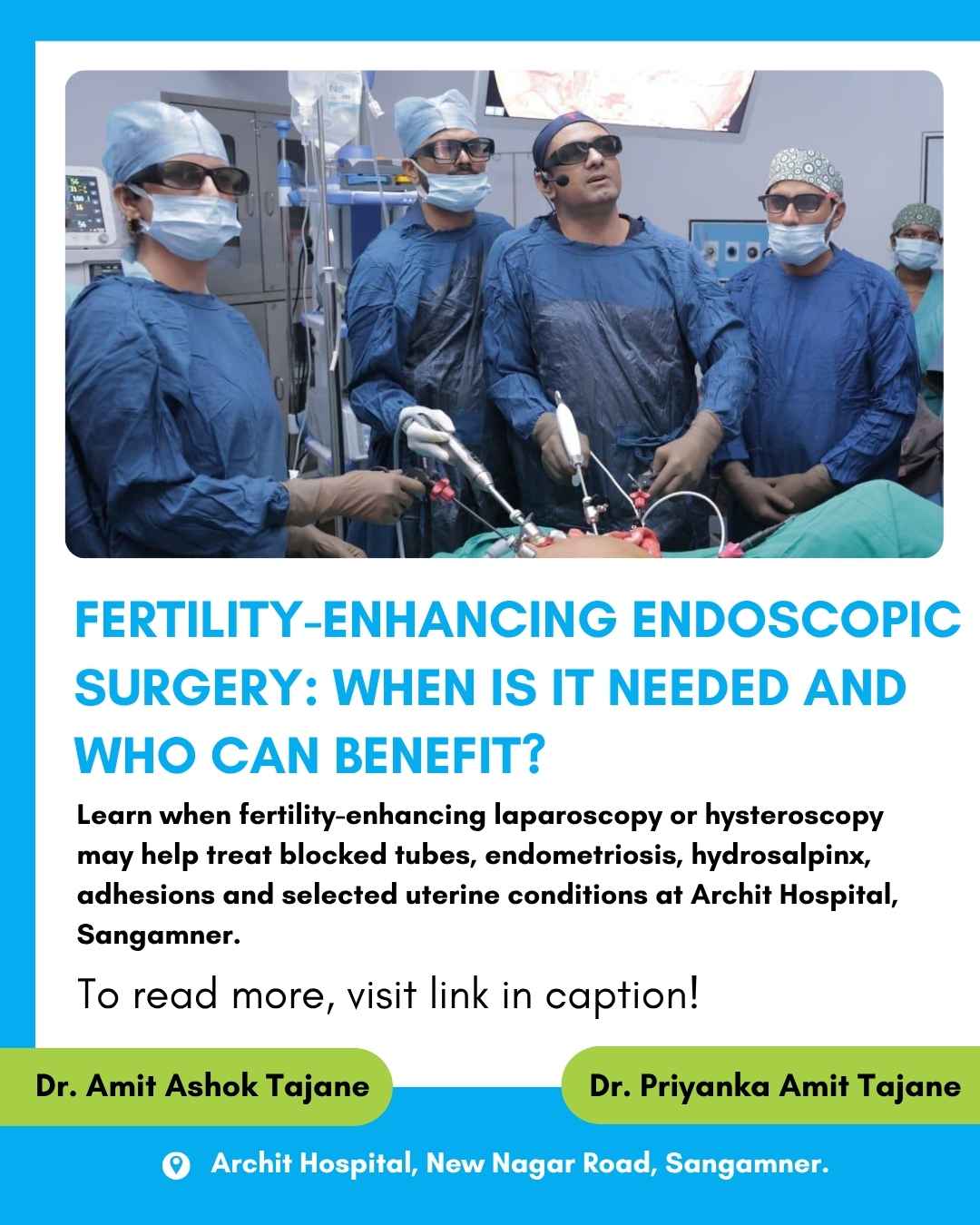
गर्भधारणेसाठी प्रयत्न करूनही यश मिळत नसेल, तर प्रत्येक वेळी शस्त्रक्रिया हाच उपाय असतो असे नाही. वंध्यत्वामागे हार्मोनल समस्या, ओव्ह्युलेशन, पुरुषांमधील शुक्राणूंची समस्या, अंड्यांचा साठा किंवा इतर अनेक कारणे असू शकतात.
पण काही रुग्णांमध्ये फॅलोपियन ट्यूब ब्लॉक होणे, एंडोमेट्रिओसिस, हायड्रोसॅल्पिन्क्स, पेल्विक अॅड्हीशन्स किंवा गर्भाशयातील काही समस्या यांसारखे कारण असू शकते. अशा परिस्थितीत योग्य रुग्णाची निवड करून लॅप्रोस्कोपी किंवा हिस्टेरोस्कोपीसारखी एंडोस्कोपिक शस्त्रक्रिया गर्भधारणेची शक्यता सुधारण्यासाठी महत्त्वाची ठरू शकते.
म्हणून प्रश्न फक्त “मला लॅप्रोस्कोपी करावी का?” हा नाही.
खरा प्रश्न आहे — “माझ्या वंध्यत्वाचे कारण काय आहे आणि शस्त्रक्रियेमुळे मला खरोखर फायदा होईल का?”
Trying to conceive can be an emotional journey, especially when pregnancy does not happen despite months of trying. Many couples immediately assume that infertility means they need IVF or surgery. But infertility treatment is not a one-size-fits-all approach.
The important question is not “Do I need surgery?” but rather “Is there a correctable problem that surgery can treat?”
At Archit Hospital in Sangamner, Dr. Amit Tajane, Laparoscopic Gynaecologist & Fertility Expert, focuses on evaluating the underlying cause of infertility before recommending treatment. Archit Hospital was established in Sangamner in 2013 and provides gynaecology, laparoscopy and infertility care.
Fertility-enhancing endoscopic surgery refers to minimally invasive procedures such as laparoscopy and hysteroscopy that are performed to diagnose and, where appropriate, treat certain conditions that may interfere with conception.
Laparoscopy uses a small camera inserted through tiny abdominal incisions to examine the uterus, ovaries, fallopian tubes and surrounding pelvic structures. Hysteroscopy uses a camera passed through the vagina and cervix to directly examine the inside of the uterus.
The major advantage is that, when a surgically correctable problem is identified, diagnosis and treatment can sometimes be performed during the same procedure.
However, this does not mean every woman with infertility needs laparoscopy. Surgery should have a clear indication and should be recommended after considering factors such as age, ovarian reserve, ovulation, semen analysis, tubal status, duration of infertility and previous treatment.
No.
This is one of the most important things an infertility patient should understand.
If a woman has regular ovulation, normal tubes, an appropriate uterine environment and no clinical indication for surgery, diagnostic laparoscopy may not be necessary.
Similarly, infertility can result from male-factor issues, ovulation problems, diminished ovarian reserve, age-related factors or unexplained infertility. These situations may require medical treatment, ovulation induction, IUI, IVF or other approaches rather than surgery.
The objective should always be to choose the least invasive treatment that is appropriate for the individual couple.
Laparoscopy may be considered when investigations or symptoms suggest a pelvic condition that could affect fertility.
Some important situations include:
- Blocked or Damaged Fallopian Tubes
Fallopian tubes play an important role in natural conception because they provide the pathway where sperm and egg can meet.
Tubal blockage may occur because of previous pelvic infection, tuberculosis, previous surgery, endometriosis, adhesions or other pelvic conditions.
Depending on where and how severely the tube is affected, treatment options can include laparoscopic adhesiolysis, tubal surgery or, in selected cases, IVF.
The decision depends on factors such as the woman’s age, ovarian reserve, extent of tubal damage and fertility history.
- Hydrosalpinx
Hydrosalpinx is a condition in which a fallopian tube becomes blocked and fills with fluid.
It can interfere with natural conception and may also negatively affect IVF outcomes. Treating a significant hydrosalpinx before IVF may therefore be recommended in appropriate patients.
Depending on the individual situation, laparoscopic treatment may involve salpingectomy or tubal occlusion rather than attempting to reconstruct a severely damaged tube.
- Endometriosis
Endometriosis can affect fertility in several ways. It may cause inflammation, adhesions, ovarian endometriomas and distortion of normal pelvic anatomy.
In carefully selected patients, laparoscopic surgery can be used to treat endometriosis and restore pelvic anatomy.
But surgery for endometriosis is not automatically the right answer for every woman trying to conceive. The decision needs to consider age, ovarian reserve, severity of disease, pain, previous surgery and whether spontaneous conception or assisted reproduction is the more appropriate route.
This is particularly important with ovarian endometriomas because ovarian surgery can potentially affect ovarian reserve.
- Pelvic Adhesions
Previous pelvic surgery, infection, endometriosis or inflammation can sometimes cause organs to stick together.
Adhesions around the fallopian tubes or ovaries may interfere with normal movement and reproductive anatomy.
Laparoscopic adhesiolysis may be considered when adhesions are significant and are believed to be contributing to infertility.
- Fibroids Affecting Fertility
Not every fibroid requires removal.
The location, size and relationship of the fibroid to the uterine cavity are important.
Fibroids that distort the uterine cavity may have a greater impact on fertility than fibroids that do not affect the cavity.
In selected cases, minimally invasive surgery such as laparoscopic myomectomy may be considered.
The decision should balance the potential fertility benefit against the risks of surgery and the possibility of future pregnancy complications.
- Uterine Polyps and Cavity Abnormalities
Hysteroscopy can provide a direct view of the uterine cavity.
It may be useful when conditions such as:
- Endometrial polyps
- Submucosal fibroids
- Uterine septum
- Intrauterine adhesions
- Other cavity abnormalities
are suspected.
Depending on the diagnosis, these conditions can sometimes be treated hysteroscopically without abdominal surgery.
- Previous Ectopic Pregnancy or Tubal Surgery
Women with a history of ectopic pregnancy or previous tubal surgery may require detailed assessment of the remaining tube and pelvic anatomy.
Laparoscopy can sometimes provide additional information and help determine whether attempting natural conception, further tubal treatment or IVF is more appropriate.
Surgery should not be the starting point of every infertility evaluation.
A comprehensive assessment may include:
- Detailed medical and fertility history
- Menstrual and ovulation assessment
- Ultrasound
- Ovarian reserve assessment when appropriate
- Assessment of the uterus and fallopian tubes
- Semen analysis
- Relevant hormonal investigations
- Review of previous surgeries, infections or pregnancy history
Depending on the situation, tests such as HSG or other tubal assessments may be performed before deciding whether laparoscopy is required.
The aim is to avoid unnecessary surgery while identifying patients who could genuinely benefit from it.
1. Is laparoscopy compulsory for infertility?
No. Laparoscopy is not routinely required for every infertility patient. It is generally considered when there is a specific clinical reason or suspicion of a condition that may benefit from surgical treatment.
2. Can laparoscopy help me conceive naturally?
It can help selected patients when infertility is related to a surgically correctable problem such as certain forms of endometriosis, adhesions or tubal disease. However, surgery cannot guarantee pregnancy.
3. If my tubes are blocked, will laparoscopy open them?
It depends on the location and extent of the blockage and the condition of the tubes. Some tubal problems can be treated surgically, while severely damaged tubes may be better managed with IVF.
4. Is hydrosalpinx treated before IVF?
In appropriate patients, treatment of a significant hydrosalpinx may be recommended because hydrosalpinx can reduce the chances of successful assisted reproduction.
5. Can endometriosis cause infertility?
Yes. Endometriosis can affect fertility through inflammation, adhesions, ovarian involvement and distortion of pelvic anatomy.
6. Does every woman with endometriosis need surgery before IVF?
No. Surgery is not automatically required before IVF. The decision depends on factors such as age, symptoms, ovarian reserve, endometriosis severity and previous treatment.
7. Can fibroid removal improve fertility?
In selected women, particularly when fibroids distort the uterine cavity, removing them may be considered. But not every fibroid needs surgery.
8. What is the difference between hysteroscopy and laparoscopy?
Hysteroscopy examines the inside of the uterus. Laparoscopy examines the pelvic organs from the abdominal side, including the uterus, ovaries, fallopian tubes and surrounding tissues.
9. Is fertility surgery painful?
Laparoscopic procedures are performed under anaesthesia. Compared with traditional open abdominal surgery, minimally invasive surgery generally involves smaller incisions and recovery may be quicker, although recovery varies depending on the procedure performed.
10. How soon can I try for pregnancy after fertility surgery?
There is no single answer. It depends on the type of surgery, healing, the condition treated and the overall fertility plan. Your gynaecologist will advise you about when it is safe and appropriate to start trying.
11. Can surgery reduce ovarian reserve?
Some ovarian procedures, particularly surgery involving endometriomas, can potentially affect ovarian reserve. This is why fertility-preserving surgical techniques and careful patient selection are important.
12. Should I directly ask for laparoscopy if I have infertility?
Rather than asking specifically for surgery, ask for a complete fertility evaluation.
The right question is:
“What is causing my infertility, and would surgery improve my chances?”
That approach can prevent unnecessary procedures while ensuring that treatable problems are not overlooked.
For couples searching for fertility treatment, infertility treatment in Sangamner, laparoscopic fertility treatment in Sangamner, or a laparoscopic gynaecologist in Sangamner, a comprehensive evaluation is an important first step.
Patients from Sangamner and surrounding areas, as well as those travelling from Nashik and nearby regions, may benefit from discussing whether their infertility has an identifiable and treatable surgical cause.
At Archit Hospital, Sangamner, fertility care under Dr. Amit Tajane combines gynaecological evaluation with expertise in minimally invasive surgery and fertility management.
Address
1st floor, Madhukunj Complex,
Link Road, New, Navin Nagar Rd,
Sangamner, Maharashtra 422605
dr.tajaneamit@gmail.com
Phone Number
+91-8668617773
Meet the Doctors
Empowering Women's Health with Expert Care
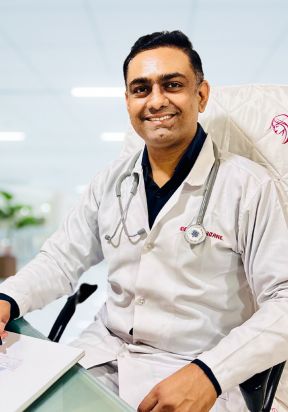
Laparoscopic Gynecologist & Fertility Expert
MBBS, DGO (Obs & Gyne)
Fellowship in Assisted Reproductive Treatments (Israel)
Fellowship in Gynecologic Endoscopy (Germany)

Clinical Embryologist
Our Achievements
Laparoscopic Surgeries
Years of Experience
Babies Delivered
नवीन जीवनाची सुरुवात...
Our Services
Comprehensive health care for women of all age group

Maternity Care
Providing comprehensive and nurturing care throughout your pregnancy journey.

Gynecologic Treatments
Expert care for all gynecological issues, tailored to women of all ages.
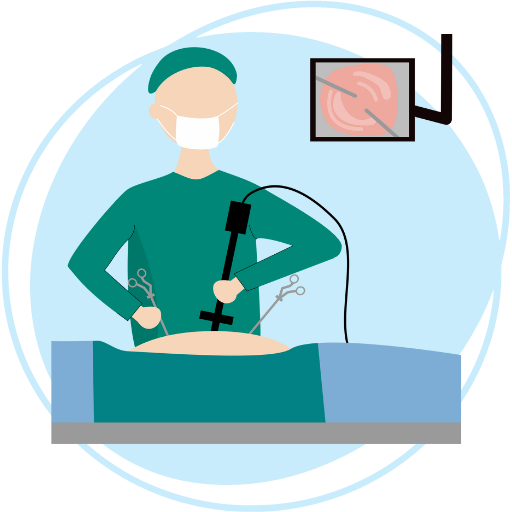
Laparoscopic Surgeries
Advanced minimally invasive surgeries for precise and effective treatment.
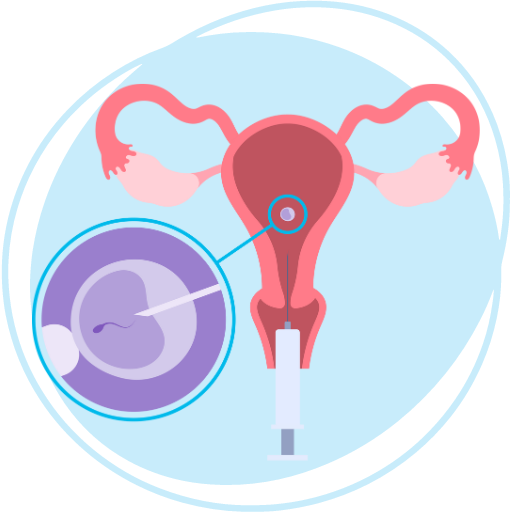
Infertility Diagnosis
Thorough and compassionate diagnosis to help you on your path to parenthood.